

The Apology We'll Never Get
The Cruelty and Conformity of the COVID Era

PART 1: The New Theology of Safety
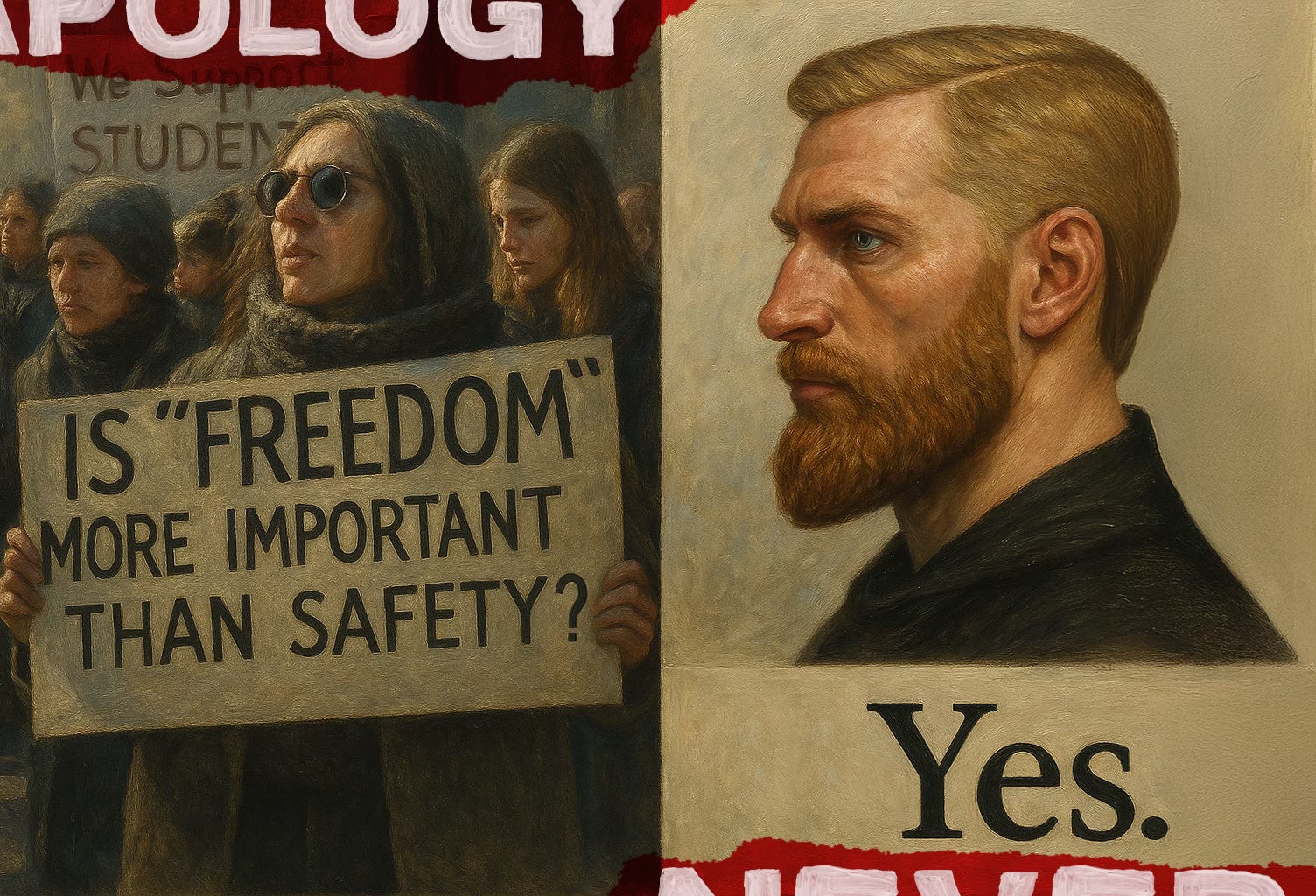
The Hysteria that Built the Cage
In early 2020, as the initial panic around COVID-19 began spreading faster than the virus itself, my wife and I found ourselves locked in disagreement about the appropriate response. She, like many, leaned toward caution—strategic supermarket trips, stockpiling supplies, preparing for whatever calamity the media promised. Having witnessed human nature's darker tendencies during emergencies in Mexico, I harboured different concerns: that our miscalculation of risk could unleash civil unrest more devastating than the disease itself. "The cure," I cautioned her, "cannot be worse than the disease." This simple observation gave her pause. The phrase became a compass through the fog of fear.
Five years later, we find ourselves surveying a landscape scarred by that very miscalculation—a scar that now encircles the globe. The damage wrought by governmental COVID responses has torn through our social order, devastated commerce, fractured families, and fundamentally altered society. And for what? For a disease with an infection survival rate north of 99% for most of the population.
Instead, we got hysteria at scale. A global psychotic break dressed up as public health policy. Now we walk among the ruins—emotional, economic, intellectual, moral. And they want us to forget. Worse: they want us to forgive. As if they didn't know. As if none of this could have been foreseen.
But some did know. Some could foresee.
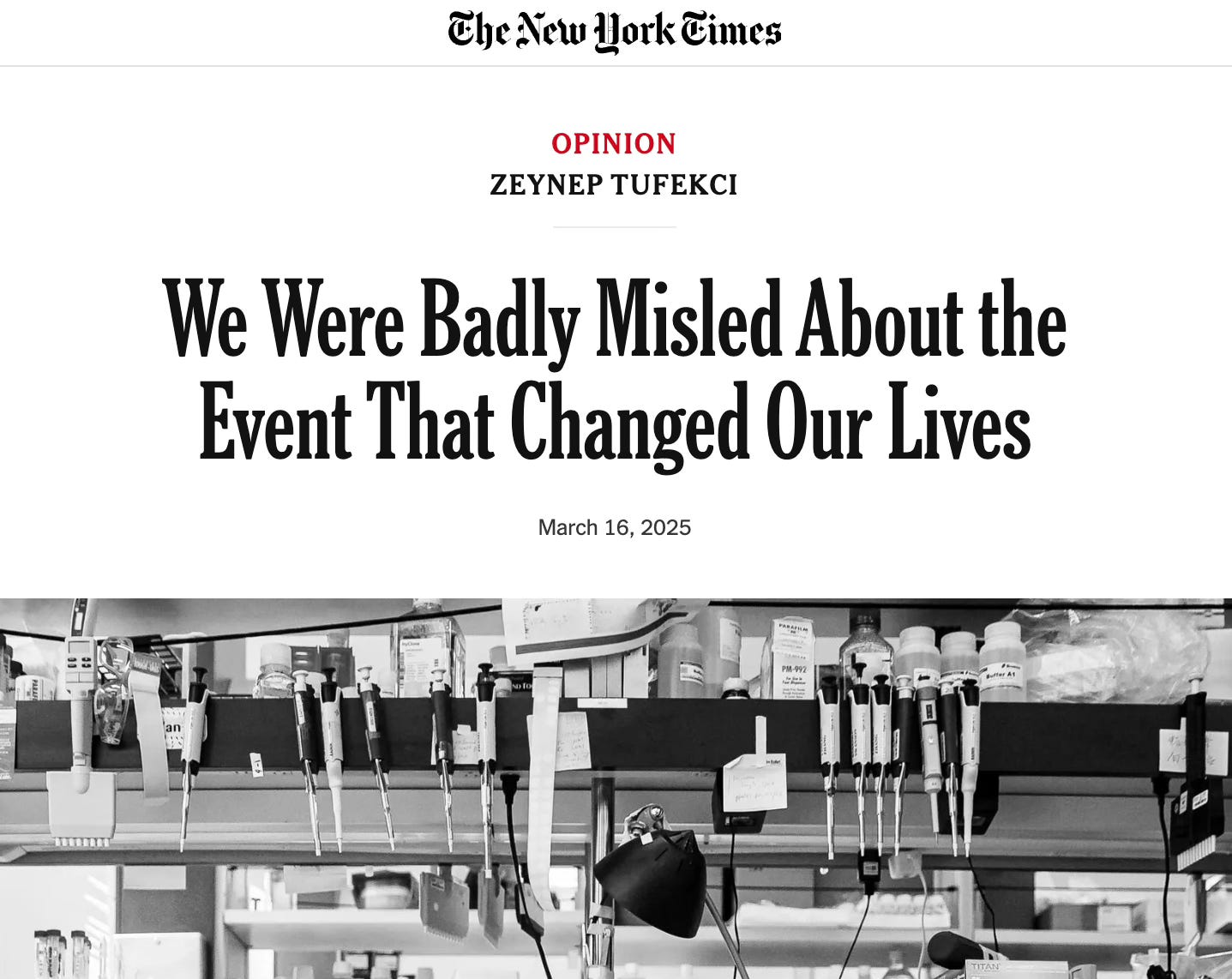
The New York Times' recent opinion piece, "We were badly misled about the Event That Changed Our Lives," published just weeks ago in March 2025, represents the latest in a growing chorus of mainstream mea culpas that aren't actually mea culpas at all. The legacy media institutions—who once treated skeptics as dangerous heretics worthy of public flogging—have begun their strategic retreat into plausible deniability. "We didn't know," they chant in unison, as though they weren't the ones who shut down every voice of dissent. As though they weren't the architects of the very hysteria they now feign to regret.
The Times piece, like all the others, offers no real admission of culpability, just a tepid acknowledgment that perhaps, possibly, maybe we overreacted. How generous of them to notice, five years and countless devastated lives later. The modern media doesn't simply report events; it manufactures them, like a factory churning out prefabricated outrage and prescribed opinions, delivered to your inbox each morning with the smug certainty of the perpetually unaccountable.
The Science™ vs. Actual Science
From the outset, we were told that "The Science™" had spoken. That it was unanimous. That it was settled. A curious proposition, given that science is a method of inquiry, not a monolith of consensus. The very concept of "settled science" is an oxymoron. The moment you treat it as unquestionable decree, it stops being science and becomes dogma.
The foundational myth of government pandemic responses was the non-peer-reviewed Imperial College model—predicting up to 2.2 million deaths in the United States and 500,000 in the UK if lockdowns were not immediately imposed. These projections—later quietly walked back—became the fuse that lit the global panic response. It wasn't a virus that caused governments to abandon reason and proportionality—it was a study filled with worst-case scenarios presented as inevitabilities.
That single model, authored by Neil Ferguson (who would later break lockdown to visit his mistress), did more to reshape the modern world than most wars. Its doomsday predictions collapsed within months, but the policies it inspired remained, ossified into law, ritual, and belief. That document was the real virus. It infected the political class, who then infected the world.
When dissent emerged—when legitimate experts offered alternative strategies—they weren't met with counterarguments. They were met with character assassination, the modern substitute for reasoned debate, where destroying reputations replaces addressing substance. The Great Barrington Declaration (published October 5, 2020), authored by respected epidemiologists from Harvard, Stanford, and Oxford, proposed a strategy of Focused Protection: shield the elderly and vulnerable, let the rest of society function, and build natural immunity. Sensible. Data-driven. Human.
But to challenge the COVID orthodoxy was to commit heresy. The declaration's authors—Jay Bhattacharya, Martin Kulldorff, and Sunetra Gupta—were vilified as "grandma killers." Their proposal was deliberately misrepresented as a plan to "let the virus rip." Emails later revealed that top officials coordinated with tech companies and media platforms to suppress the declaration's reach. They weren't wrong. They were inconvenient.
Science had become politics by other means. And questioning the narrative wasn't merely "dangerous." It was forbidden—the modern equivalent of blasphemy laws, enforced not by clerics but by fact-checkers, whose devotion to ideology surpasses any medieval inquisitor's religious fervour.
Meanwhile, jurisdictions that chose different paths—Sweden, Florida, Texas—found themselves portrayed as reckless outliers despite ultimately faring no worse (and often better) than their lockdown-obsessed counterparts. Their success was either ignored or attributed to statistical anomalies, geographical luck, or outright lies. Heaven forbid we acknowledge that alternative approaches might have merit. The modern elitist mind, after all, cannot tolerate the existence of successful counterexamples—they must be explained away, reinterpreted, or simply memory-holed.
The New Normal That Never Was Normal
What disturbs me most deeply is not that our experts were wrong—human fallibility is a given—but that ordinary people so readily surrendered their critical faculties. They swallowed whole the dystopian mantra of "The New Normal" that was emblazoned across every news channel, plastered on every billboard, and repeated in every government briefing. Like cattle being herded into a new pen, millions accepted without question that life as we knew it was simply over, replaced by this sanitized, distanced, masked existence. They embraced it, enforced it, and viciously attacked anyone who questioned it.
People who would typically demand evidence before changing their breakfast cereal suddenly accepted wholesale societal transformation on the basis of little more than fear and appeals to authority.
And now, with mind-boggling cognitive dissonance, these same people declare that things are "back to normal." Back to normal? Tell that to the restaurant owners whose generational businesses are gone forever. Tell that to the children still struggling with developmental delays from formative years spent behind masks and screens. Tell that to families still fractured over vaccination disagreements. Tell that to the demoralized legions still wearing masks in 2025, still obsessively testing for a virus that has become endemic, still jumping at shadows.
This vaunted "return to normal" conveniently ignores the psychological wreckage, the economic devastation, the educational catastrophe, and the social fissures that remain glaringly evident to anyone not committed to collective amnesia. The true scandal is that we normalized the abnormal, then declared victory when a fraction of our freedoms were graciously returned by the very authorities who seized them in the first place.
And those COVID rapid tests that people still clutch like religious talismans? The Canadian government quietly dropped them in early 2024, finally admitting what many scientists had been saying all along: they were wildly unreliable. Interior Health's decision to abandon these tests due to their documented unreliability came after years of treating their results as gospel. People were denied hospital visits with dying relatives based on these faulty tests. Employment was contingent upon them. Social gatherings were determined by them. Yet they were, as we now know officially, little better than superstitious rituals—expensive placebos that created the illusion of control while delivering false positives and negatives in equal measure.
Masks: The Secular Sacrament
Ah yes, the mask—sacred cloth of the secular COVID cult. The modern equivalent of the medieval hairshirt, worn not to mortify the flesh but to signal virtue.
In the early months, authorities like Fauci and the UK's Jenny Harries all said what science had long shown: masks do little to stop respiratory viruses. They weren't being subversive. They were being honest. Even Fauci, in his private emails, said masks offered minimal protection.
But then came The Great Reversal. Not because of new evidence—but because people needed to do something. Masking became the liturgy of safety. A sacrament. A fashion statement. A muzzle of virtue. As with so many aspects of modern progressive orthodoxy, what begins as a recommendation quickly becomes an obligation, then a moral imperative, and finally a test of basic human decency. Disagree, and you revealed yourself not merely mistaken but fundamentally immoral.
The evidence for masking remained as flimsy as the typical cloth mask. The oft-cited Bangladesh study showed, at best, marginal benefits. The definitive Cochrane meta-analysis—arguably the gold standard in medical evidence synthesis—eventually confirmed what was initially stated: "Wearing masks in the community probably makes little or no difference to the outcome of laboratory-confirmed influenza/SARS-CoV-2 compared to not wearing masks.”
Yet here we are in 2025 after the evidence collapsed, in Toronto, Gen Z youth continue masking religiously, having internalized the ritual without understanding its efficacy. The revered local comic book store The Beguiling—a cultural touchstone for the city's indie art scene—continues to require masks in April 2025, as if frozen in amber. The science may have moved on, but the ritual remains, a kind of social incense burned to signal piety. They may believe it still works, or they may simply be unwilling to confront the possibility that it never did.
This is fear-driven morality in its purest form: the ostentatious display of virtue mattering far more than the substance of virtue itself. For the committed masker, the cloth across their face declares: "I care about others," regardless of whether that cloth actually protects anyone. The symbol has replaced the reality, the gesture has conquered the outcome.
The zealotry with which ordinary people defended mandates revealed something disturbing about our relationship with authority and our willingness to surrender basic freedoms for the illusion of safety. Those who once proudly identified as "questioning authority" became its most fervent enforcers. The counterculture became the culture of control. The rebels became the regime. And all it took was fear.
Lockdowns: The Cure That Killed the Patient
"Two weeks to flatten the curve" became two years (or more in places like Canada) to flatten society. The unprecedented experiment of large-scale lockdowns—never before implemented for respiratory viruses—became the default policy around the world. And the results were catastrophic.
We destroyed businesses built over generations. We confined children to screens instead of classrooms. We prohibited human contact during life's most significant moments—births, deaths, weddings, funerals. People died alone in hospital beds (having to hold a stranger's hand instead of their daughter's in their last moments) while loved ones were forced to say goodbye via iPad. Cancer screenings plummeted. Substance abuse soared. Domestic violence increased. Depression and anxiety became the new pandemic—one we're still battling today.
This was no mere policy error. It was a civilizational self-harm on an unprecedented scale. Like a man setting fire to his house to eliminate a wasp nest, we obliterated the structures that make life worth living in the name of preserving life itself.
And for what benefit? Studies from Johns Hopkins and numerous other institutions have since confirmed what Sweden, Florida, Texas and other "control groups" demonstrated in real-time: lockdowns had minimal impact on COVID mortality while imposing catastrophic collateral damage.
The laptop class—journalists, bureaucrats, academics, creatives and tech workers—found lockdowns quite tolerable. Work from home, Netflix, food delivery, and virtue-signaling on social media made for a comfortable pandemic experience. Meanwhile, the working class suffered immeasurably, expected to risk exposure to keep the machinery of society functioning while the comfortable classes clapped from their balconies for "essential workers" before returning to Zoom calls.
This class divide exposed the hypocrisy at the lockdowns’ core. If the situation were truly apocalyptic, would we really send delivery drivers, grocery clerks, and factory workers into the viral breach while the professional-managerial class remained safely bunkered? The answer reveals that even the most fervent lockdown advocates understood, at some level, that the risk was manageable for most people.
It also exposed something ugly in human nature: those who benefited from lockdowns were most vocally supportive of them, while dismissing the concerns of those whose livelihoods were destroyed as "just about the economy." As though "the economy" were some abstract concept unrelated to human well-being rather than the means by which people feed their families.
During those grim years, I had countless conversations with a close friend where I pointed out—often with data and references in hand—that the grand experiment had already run its course. These jurisdictions didn’t follow the script, and yet they weren’t faring any worse than the ones that did. But every time I brought this up, his reply was the same, said with the calm detachment of someone outsourcing judgment to the future: “We shall see.” It wasn’t curiosity—it was a rhetorical shrug that postponed judgment indefinitely. The implication: the full picture is never quite in, and thus no reckoning is ever required.
This, perhaps, is the most frustrating aspect of arguing with the pandemic-era worldview—the eternal deferral of judgment. Evidence is never sufficient. Data is never complete. The moment of accountability is always just beyond reach, like a mirage in the desert, forever promising relief that never arrives.
PART 2: The Church of Compliance
Vaccines: From Medical Intervention to Moral Imperative
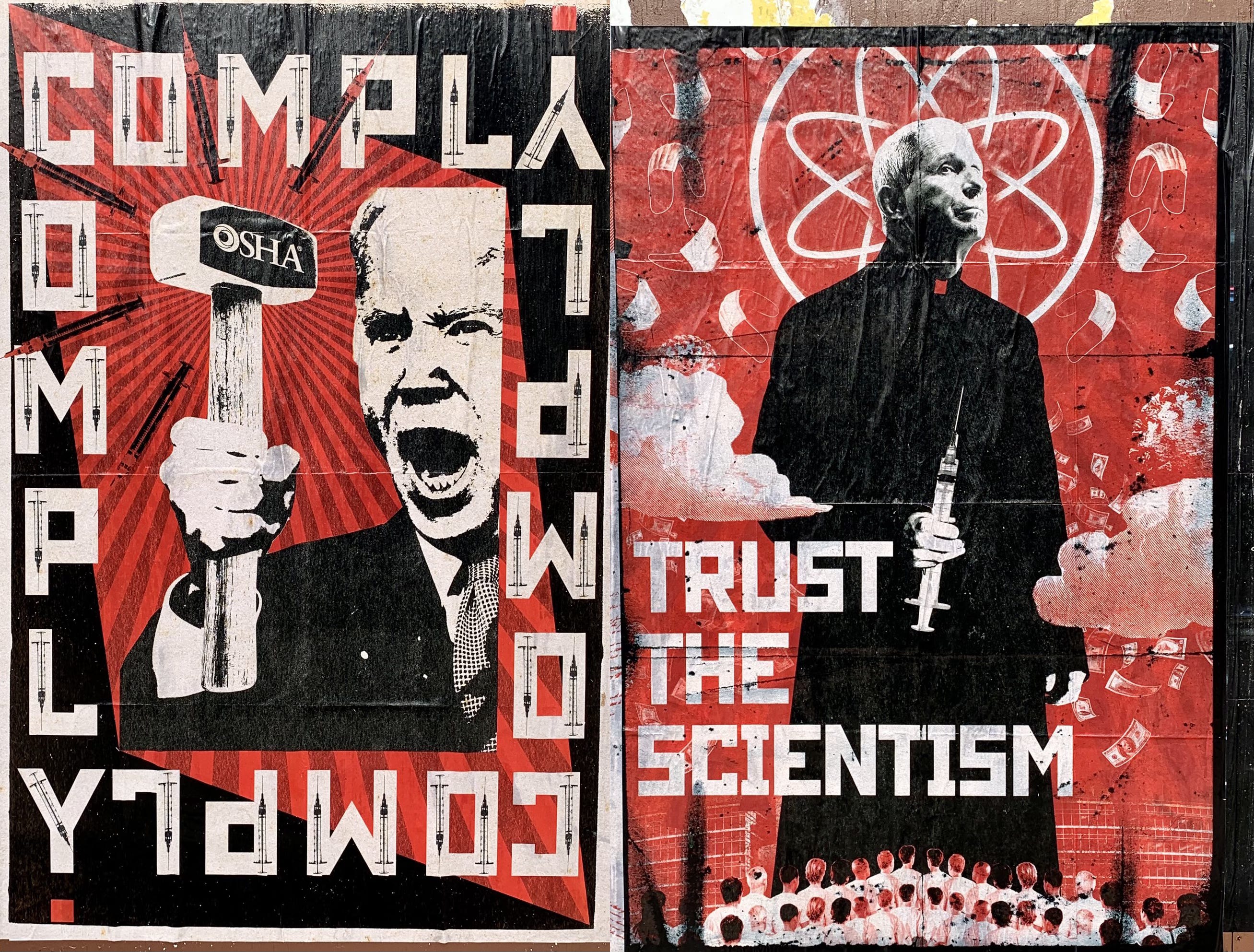
Let's be clear: vaccines, historically, are miraculous. But the COVID shots were not miracles. They were pharmaceutical products—rushed, oversold, and forcibly administered under false pretenses. They became not medical interventions but religious rites, complete with sanctification ceremonies. The needle replaced the communion wafer; the vaccination card became the modern indulgence, purchased not with money but with compliance.
"Safe and effective," we were told. Effective at what, exactly? Not at preventing infection. Not at stopping transmission (as became painfully obvious when the vaccinated continued contracting and spreading the virus). Yet the mantra remained because the moral story required it. Vaccine passports were introduced, not as public health tools, but as loyalty oaths (predicated on the false premise that vaccination protected others). To question them was to become a pariah.
Young, healthy people were pressured—coerced, really—into vaccination despite negligible risk. Questions about side effects, myocarditis, pericarditis, menstrual irregularities, and even (in rare cases) death were met with censorship, not answers. The phrase "vaccine injury" became taboo, even as reports poured in.
Meanwhile, any post-COVID symptom, no matter how unrelated, was quickly assigned to "Long COVID." But vaccine injuries? Don't ask. Don't investigate. Don't even think it. This was no longer medicine. It was a sacrament.
The Rules Applied to Thee, Not to Me
Perhaps nothing eroded public trust more thoroughly than the blatant hypocrisy of our ruling class. While ordinary citizens faced fines, arrests, and public shaming for violations, elites flouted the very rules they imposed with impunity.
Gavin Newsom dined maskless at the French Laundry after arresting people for walking on the beach. Nancy Pelosi got her hair done in a shuttered salon. Neil Ferguson, the Imperial College modeller whose apocalyptic predictions drove lockdown policies, broke quarantine to meet his married lover. Boris Johnson hosted parties at 10 Downing Street while Britons were prohibited from visiting dying relatives.
In Canada, Prime Minister Justin Trudeau invoked the Emergencies Act—not to combat a virus, but to crush a peaceful protest against vaccine mandates. He froze bank accounts, expanded surveillance powers, and smeared dissenters as extremists. It was a stunning act of authoritarian overreach from a leader who once claimed to admire China's "basic dictatorship." And yet, he went out mid-pandemic and knelt in front of Marxist during 2020’s 'Summer of Love’.
Jacinda Ardern, in New Zealand, declared her government "the single source of truth" and locked her country into one of the world's most draconian regimes. It was tyranny with a TED Talk accent, delivered with the serene smile of someone who knows what's best for you better than you do yourself.
These weren't merely hypocrisies. They were revelations. The mask slipped, both literally and figuratively. The rules were never about safety. They were about control.
The Statistics That Never Made the Headlines
Throughout the pandemic, certain statistics were emphasized ad nauseam while others were conveniently ignored. Case counts and death tolls dominated headlines without context or nuance. Meanwhile, data that might have led to more targeted approaches remained buried, like inconvenient corpses beneath the foundations of the narrative.
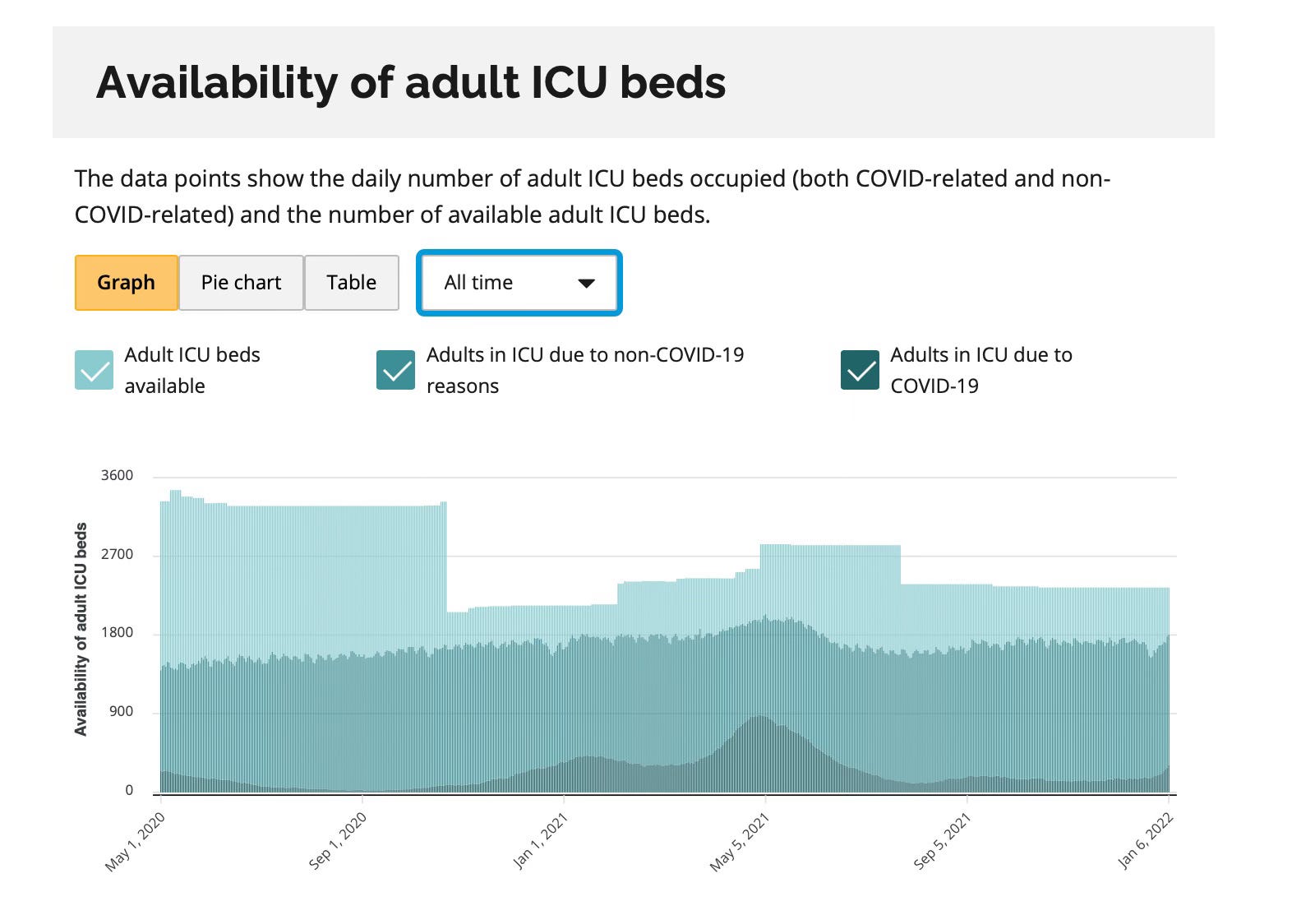
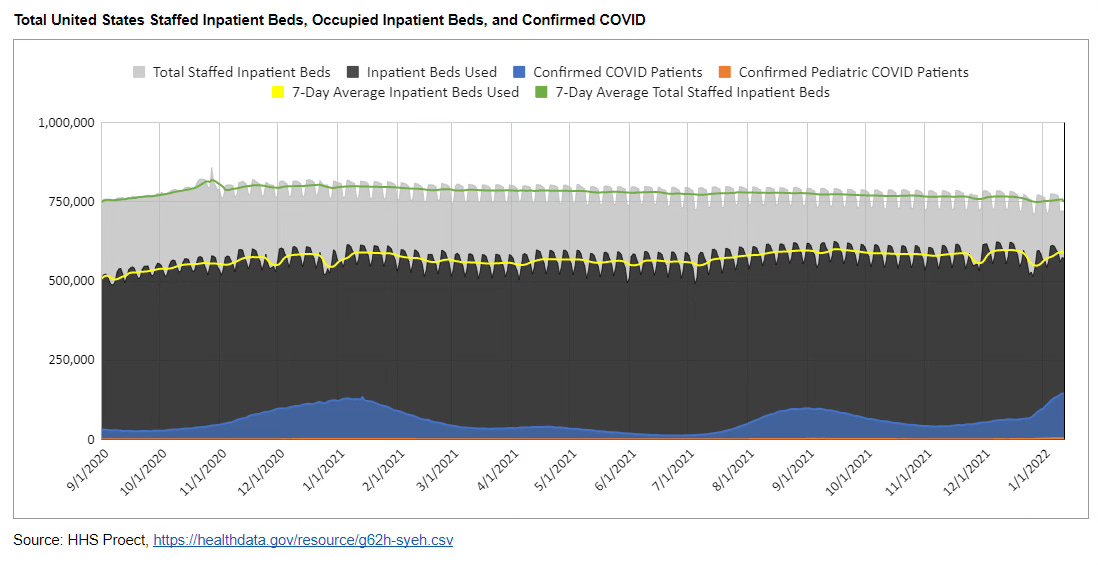
Consider these inconvenient facts: Most COVID deaths occurred in people with underlying health conditions. The median age of COVID death exceeded the average life expectancy in many countries. Children faced greater risk from seasonal influenza than from COVID-19. Hospital capacity issues resulted more from staffing shortages and protocol changes than from overwhelming patient volumes.
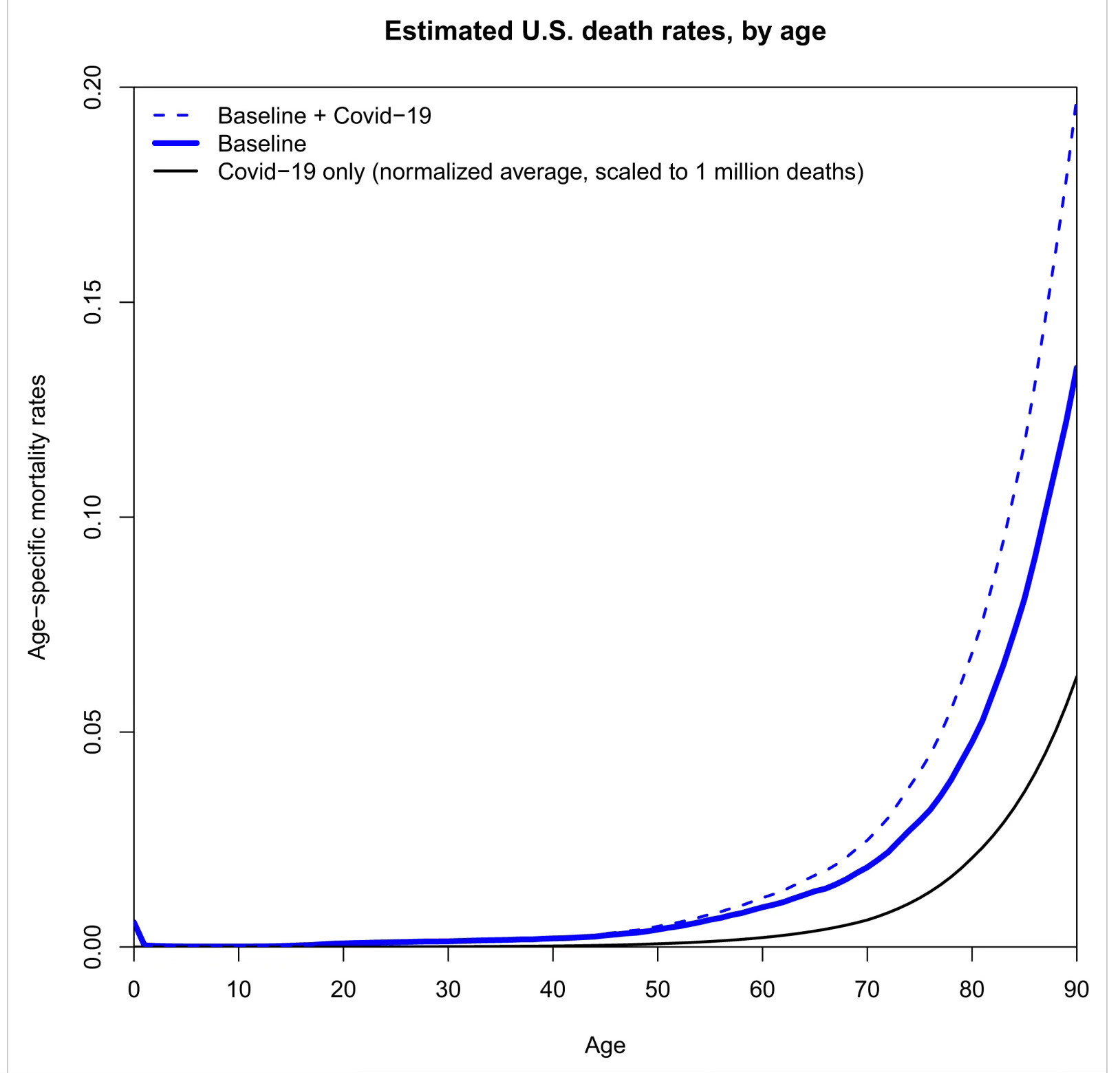
The age-stratified nature of COVID risk—where mortality increased exponentially with age—should have informed a targeted protection approach. Instead, we implemented one-size-fits-all policies that treated college students and nursing home residents as facing identical risks. This wasn't public health. It was public hysteria dressed in the lab coat of science.
The predicted ICU capacity crisis—the original justification for "flattening the curve"—never materialized in most locations. Field hospitals constructed at great expense stood empty. The USNS Comfort and Mercy, deployed to New York and Los Angeles respectively, treating 180 and 77 patients before departing. Yet these facts didn't prompt policy reassessment; they were simply memory-holed as the goalposts shifted yet again.
Excess death data now reveals a disturbing truth: many regions experienced mortality surges not attributable to COVID itself but to lockdown effects—delayed medical care, substance abuse, suicide, and despair. When I say I know more people who died from despair than from COVID, I'm not being hyperbolic. I'm simply acknowledging what many refuse to see: that our response killed more than it saved.
The Science Didn't Change; The Political Incentives Did
Perhaps the most insulting aspect of the pandemic response was the insistence that policy reversals reflected "evolving science" rather than shifting political winds. The claim that "the science changed" became the all-purpose excuse for acknowledging what was obvious from the beginning.
The ineffectiveness of cloth masks didn't suddenly become apparent in 2022; it was known in 2020, acknowledged by Fauci in his emails, then denied publicly for political expediency. The arbitrary nature of six-foot distancing rules—which Fauci later admitted had "sort of just appeared"—wasn't a scientific discovery but a bureaucratic invention.
Travel bans, initially decried as xenophobic when implemented by the first Trump administration, were later embraced by the same critics when politically convenient. The lab leak hypothesis, branded a conspiracy theory and grounds for social media censorship, has since become the assessment of multiple intelligence agencies and the Department of Energy. Yesterday's conspiracy theory is today's plausible scenario is tomorrow's acknowledged truth—not because the facts changed, but because the political utility of denial expired.
The science didn't change; the political calculus did. What was "misinformation" on Tuesday became accepted fact on Wednesday, not because new evidence emerged overnight but because the narrative shifted. This cynical manipulation undermined trust in both science and institutions—perhaps the pandemic's most lasting damage.
The COVID apologist crowd has perfected a unique form of gaslighting: claiming both that nothing has changed ("we always said this") and that everything has changed ("the science evolved") simultaneously. It's a rhetorical sleight of hand that allows them to never be wrong, never be accountable, and never need to apologize. They are perpetually vindicated by their own circular logic.
"We Didn't Know" – The Great Abdication
As the failures of pandemic policies become increasingly undeniable, a new narrative has emerged: "We didn't know." This mantra, repeated by public health officials, journalists, and "experts" who once spoke with godlike certainty, represents not humility but abdication of responsibility. It is the bureaucrat's perpetual alibi, the expert's eternal escape hatch.
Emily Oster's infamous Atlantic article calling for "pandemic amnesty" perfectly encapsulated this evasion. "We didn't know," she pleaded, as though the information wasn't available, as though experts like the Great Barrington Declaration authors weren't censored, as though alternative approaches weren't demonstrating success in real-time.
Scott Galloway echoed this sentiment, claiming retrospective wisdom while conveniently forgetting his own certainty during the crisis. The New York Times, after years of promoting the most extreme measures and demonizing skeptics, now cautiously acknowledges overreach with the same excuse: "We didn't know.”
But we did know. Many knew. Switzerland knew when it kept schools open. Texas and Florida knew when they ended lockdowns early. Sweden knew when it rejected lockdowns entirely. Countless scientists, physicians, and ordinary citizens knew—and were silenced for saying so.
The contemporaneous phrase wasn't "We don't know" but "We shall see." This wasn't an admission of uncertainty but a patronizing dismissal, implying that critics would eventually be proven wrong and properly chastised.
Now that vindication has arrived for the skeptics, the response isn't apology but amnesia. "We didn't know" isn't a defence; it's a lie. The information existed. The alternative viewpoints were expressed. The data was available. They simply chose to ignore it all in favour of a narrative that consolidated power and control.
So, no.
You chose not to know. You censored those who knew. You mocked them. You ruined their careers. You broke families. You banned funerals. You shut schools. You turned science into dogma—all while sipping wine and filming TikToks about "doing your part.”
And now, you want forgiveness without confession.
This is the modern political elite’s playbook: demand obedience in the moment, then plead ignorance in retrospect. It's accountability for thee but not for me. It's certainty when imposing, amnesia when reckoning. And it leaves us all in a perpetual cycle of abuse, where the same authorities who harmed us yesterday demand our trust again today—without ever acknowledging the damage they've done.
The Destruction of Trust
The scars are permanent. Trust in institutions? Gone. Trust in experts? Shattered. Families torn apart. Friendships dissolved. Children psychologically damaged. A civilization that once prized liberty handed it over with barely a squeak, revealing that perhaps we never truly valued it after all. We discovered, to our horror, that most people will trade freedom for security without hesitation.
The pandemic response has left a legacy of broken trust that extends far beyond public health. Families and friendships have been destroyed over vaccination status, masking practices, and lockdown policies. Thanksgiving dinners became battlegrounds. Weddings became vaccination-status sorting mechanisms. Grandparents were kept from grandchildren. The social fabric, already fraying, was shredded.
They told us we were all in this together. We weren't. The laptop class lounged in comfort while the working class kept the world running. The ruling class danced while the rest of us grieved. The mandates applied only downward and somehow never seemed to affect those at the top.
The media's role in this destruction cannot be overstated. Rather than questioning authority and providing diverse perspectives—the traditional journalistic mission—major outlets became propaganda arms for official narratives. Alternative viewpoints weren't merely criticized but demonized. Scientific debate wasn't merely ignored but actively suppressed. The Fourth Estate transformed itself into the fourth branch of government, enforcing compliance rather than demanding accountability.
A former friend of my wife (the friendship a casualty of the lockdowns) confidently declared in 2020, “The masking won’t last for three years.” In Canada, it persisted for nearly that long. A wealthy family member told her he didn’t mind wearing a mask for another two years. He said it with the calm assurance of someone for whom the stakes were purely theoretical—no lost job, no missed rent, no child slipping into depression. He could afford the inconvenience. And that, I think, was the root of it all: so many people weren’t making moral calculations—they were rationalizing comfort. They weren’t sacrificing—they were outsourcing the cost of their comfort to others.
What puzzles me still is how many intelligent people fell for it—not because they lacked information, but because they didn't want the truth. They wanted affirmation. They wanted to be safe more than they wanted to be free. They didn't burn the village by accident. They burned it on purpose to keep themselves warm. And now, standing amid the ashes, they have the audacity to ask why it's so cold.
The Future Historians Will Judge
Future historians, studying this period with the clarity of distance, will marvel at our collective madness. They will note the abandonment of established pandemic protocols in favour of untested, destructive interventions. They will document the suppression of dissenting experts and the religious adherence to measures lacking scientific foundation. They will record the transfer of wealth from small businesses to corporate giants, from working class to laptop class, all under the banner of public health.
They will, I suspect, categorize this period alongside other mass hysterias throughout history—the witch trials, the Tulip mania, the various moral panics that periodically grip societies. But they will note one crucial difference: never before had such madness been global in scale, never before had it been so thoroughly institutionalized, and never before had the technological means existed to enforce conformity so completely.
The scar around the world—economic, psychological, educational, social—will long outlast the virus itself. Children who lost years of proper education and normal socialization. Small businesses permanently shuttered. Mental health crises that continue unabated. Trust in institutions that may never recover. These represent the true legacy of our pandemic response.
There will be no apology. And perhaps we shouldn't want one. Because if they apologized, we'd be expected to forgive. And I'm not sure some of us are ready to forgive what we witnessed in our fellow citizens—the eagerness with which they embraced authoritarianism, the cruelty they justified in the name of safety, and the smug certainty with which they condemned those who questioned the narrative.
But the reckoning must come. If not publicly, then privately. If not today, then in time. Because the truth remains, no matter how loudly the narrative shifts.
We weren't all in this together. And we can never pretend otherwise.
When the next crisis emerges, as it inevitably will, remember this one simple principle: The cure must not be worse than the disease. It's a lesson we've paid dearly to learn, and one we cannot afford to forget.
Keep. Those. Receipts.
Don't let this be memory-holed.
People can make mistakes and that's OK. It's different when they deny it or try to shift blame.