

The Illusion of Neutrality
The comfort of consensus, the cost of deceit

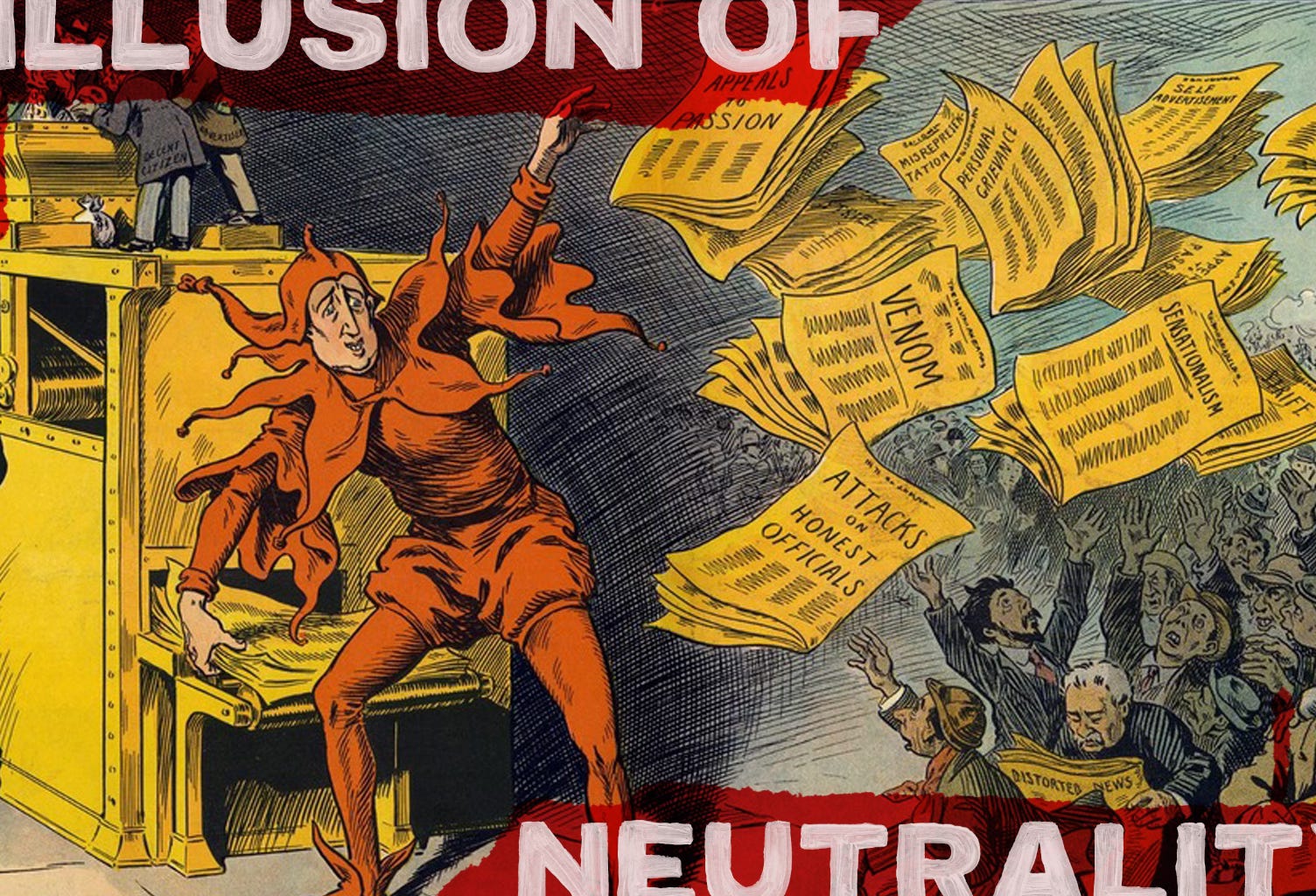
Nothing is more dishonest than someone who insists they have no bias.
This fantasy of neutrality is not just a quirk of intellectuals; it is a social performance. At dinner parties, it is the conversational trump card: “I heard it on All Things Considered…” or “I was just reading in the Times…” The sentence doesn’t merely introduce a fact, it announces a posture—I belong to the class of the informed, the reasonable, the enlightened. To challenge it is to risk derision, as though you had just quoted horoscopes or daytime talk TV.
It functions as a shield. When people repeat, almost word for word, the same headlines, the same framing, the same “takeaways” from the week’s news, they imagine themselves as merely reflecting the consensus of rational people. In truth, they are parroting the house style of their preferred bubble. They call it “neutral” because everyone around them is saying it, and the sameness is mistaken for truth.
And in private life, it has become a marker of virtue. People preface opinions with, “I don’t watch Fox,” the way Victorians once assured you they didn’t frequent brothels. The denial is part of the performance. Of course, both left and right indulge in this illusion of neutrality. But at present, the progressive left suffers it most acutely—because it controls the commanding heights of legacy media, academia, and corporate culture. Bias is always the sin of others, never your own.
The neutralist is everywhere, insisting that their worldview is the water in which we all swim. But the water is tainted—clouded by ideology and sold as pure.
Consensus as Comfort Food
I work in a field where opinions about the most controversial issues of our time are treated as foregone conclusions. Climate change? Settled beyond discussion. The Trump administration? Evil incarnate. Immigration, policing, COVID, Gaza—you name it. In my industry (as I suspect in many other art-related ones), the framing is always the same: we all agree. And if you don’t, there is something wrong with you.
Disagreeing isn’t disagreement, it’s deviance. To step outside the consensus isn’t to hold an alternative view but to commit a kind of secular blasphemy. The punishment is swift and familiar: you are accused of sliding toward authoritarianism, flirting with fascism, or harboring some other ideological disease. The consensus comforts because it absolves people of the burden of argument. It is easier to say “we all know” than to defend “I believe.” And when progressives do defend “I believe,” it usually comes pre-packaged as a lawn sign slogan—proof of virtue, not proof of thought.
I once witnessed a colleague grow very defensive over this exact dynamic. He’d gotten into a political argument with someone who suggested that his views might be shaped by his family’s political history. A reasonable point, you’d think—none of us are neutral. But my colleague took it as an attack on his integrity.
The crime? Suggesting he might have bias.
I’ve also heard the argument—delivered with complete confidence—that while corruption has always existed in government, the Trump administration is “orders of magnitude worse.” What struck me was the refusal to acknowledge allegations on the other side: Hunter Biden’s laptop, the family’s influence peddling, Green New Deal favors, preemptive pardons, the concealment of Biden’s cognitive decline, not to mention the ongoing Russiagate revelations. To spotlight one party’s sins while waving away the other’s isn’t neutrality. It is spin, disguised as common sense.
This is what bubbles do. They produce not just conformity of thought but fragility of ego. When “we all agree,” bias isn’t something we all share, it’s something only the other side has. To suggest otherwise is to touch the third rail: you have insulted not just the person’s politics, but their self-image as a neutral, objective thinker.
I’ve seen it again and again. A colleague will confidently pronounce that “everyone knows” a particular position is correct—whether on climate, policing, or COVID mandates. And when someone asks a simple question, not even staking out an opposing stance but merely suggesting there might be other views worth considering, the mood shifts. Faces tighten. The air grows tense. Suddenly it’s not just a question; it’s a problem.
Consensus provides comfort because it feels like safety in numbers. But comfort food is rarely nutritious. An untested consensus breeds intellectual flabbiness: soft, complacent, unable to defend itself when challenged.
Presenting Institutional Capture as Reform
You can see the same trick play out not just in conversation but in the very institutions that shape our public life. The pattern is always the same: radical power grabs rebranded as sober, necessary “reforms.”
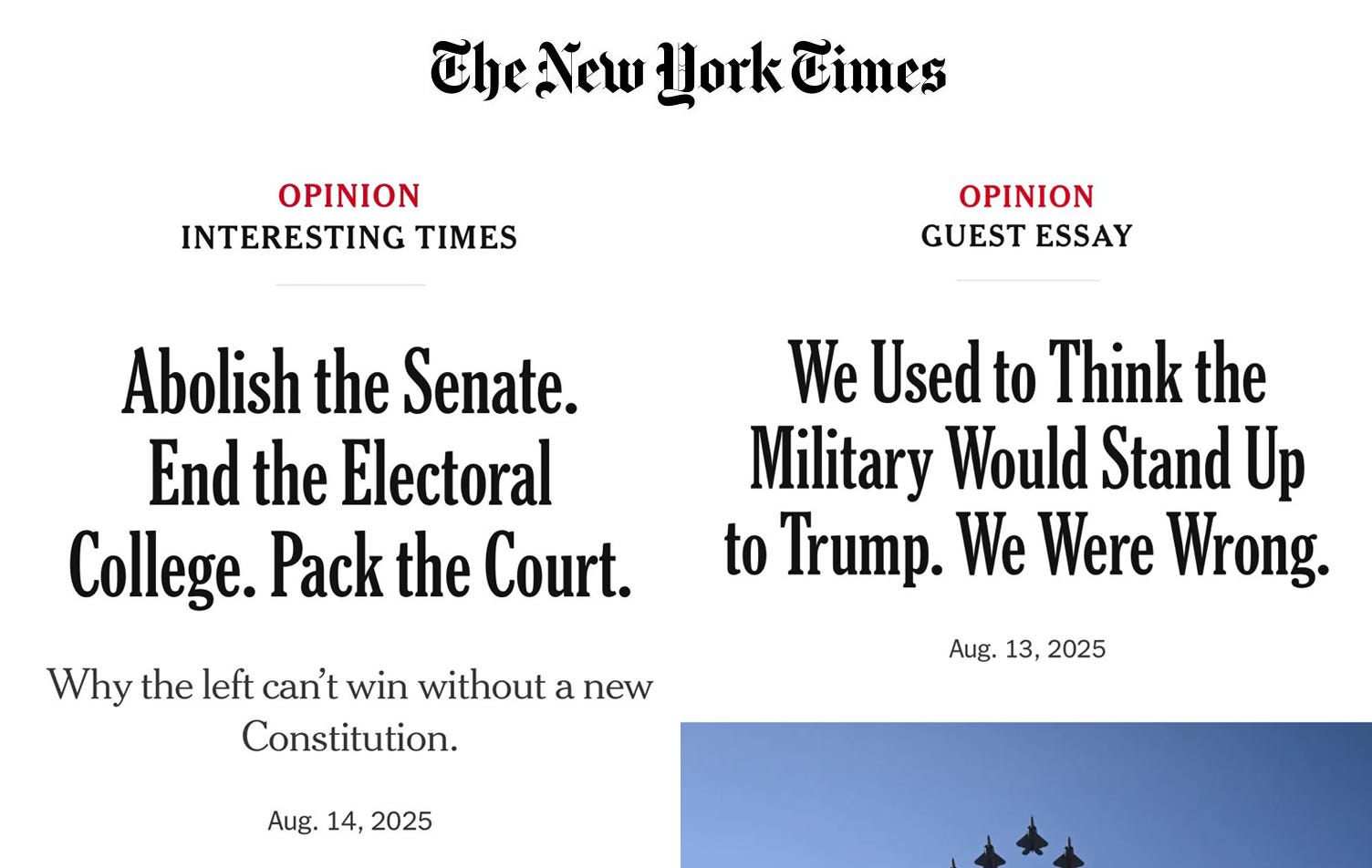
Take The New York Times. When it runs a headline like “Abolish the Senate. End the Electoral College. Pack the Court,” it presents these ideas not as the ravings of extremists but as modernization, an overdue housecleaning, the natural “evolution” of democracy. But imagine if Breitbart had published the exact same piece arguing to rewrite the Constitution so the political right can win elections. It would have been denounced instantly as lunacy. Yet when the Times prints it, it’s marketed as thoughtful reform.
Or consider another op-ed: “We Used to Think the Military Would Stand Up to Trump. We Were Wrong.” Presented as grave civic reflection, it is in fact an endorsement of the military as political referee—a straight-faced coup fantasy, served up in the hushed tones of civic reflection. Readers are not told they’re being asked to accept a dangerous precedent. They’re told they’re hearing the responsible musings of thoughtful elites.
Michael Shellenberger and Aaron Maté recently joined Megyn Kelly to dissect how The New York Times’ The Daily podcast framed the Steele dossier. What they found was not journalism but narrative management. Exculpatory details were quietly omitted, inconvenient facts about the FBI’s initial doubts were brushed aside, and the whole thing was presented in the solemn cadence of neutrality. It wasn’t reporting—it was gaslighting. And it worked precisely because of the Times’ reputation as the paper of record. Readers thought they were being given sober fact, when in truth they were being spoon-fed curated fiction.
What makes the Times such a perfect example is that it still markets itself as the “paper of record.” People expect MSNBC or the Daily Wire to have a slant; almost nobody turns on Rachel Maddow imagining they’re getting unvarnished neutrality. But the Times? The Times has convinced millions that its editorial line is simply reality, delivered in the solemn tones of the neutral middle. It is not just biased—it is biased while insisting that it isn’t.
And that is more dangerous than partisanship admitted. At least when the Marxist magazine Jacobin calls for socialism, everyone knows what’s on offer. At least when Ben Shapiro demands limited government, he does it under his own flag. But when the Times smuggles the same ideological zeal into the language of “reform,” the audience swallows it without chewing.
This is the sleight of hand: presenting institutional capture as reform.
And the same trick plays out everywhere else: universities calling it “modernization,” professional guilds calling it “best practices,” tech companies calling it “safety.” Different costumes, same capture.
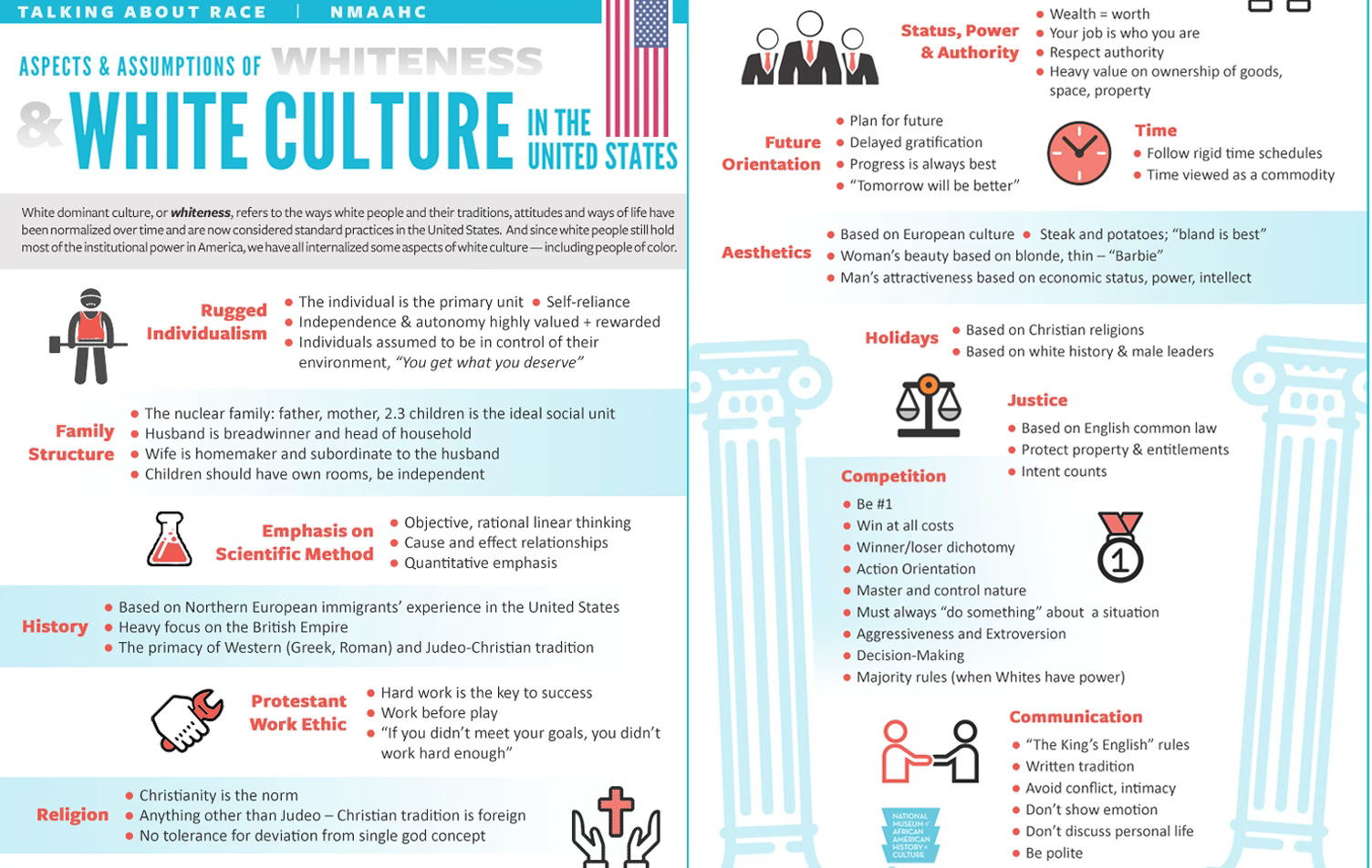
The recent meltdown over the Trump administration’s review of the Smithsonian is just another version of the trick. We’re told this is censorship, a sinister assault on history itself. Yet these same journalists yawned when the Smithsonian cheerfully borrowed from the discredited 1619 Project or when it published absurd diagrams declaring punctuality, hard work, and rational thinking to be marks of “whiteness.” That was never scandal—it was “progress.”
In other words, there was no reporting when the Smithsonian embraced radical revisionism under the banner of “progress.” That was treated as neutral, inevitable, even enlightened. But the moment an administration attempts to roll back those ideological changes, suddenly the watchdogs discover their bark. Neutrality is invoked only when it flatters one side of the debate.
The Censorship of History
One of the reasons the illusion of neutrality is so strong on the left is because history itself has been bowdlerized to flatter the narrative. In schools, in mainstream media, in the cultural bloodstream, totalitarianism is rarely taught as something that can emerge from both directions. Fascism and Nazism are drilled in as “right-wing” evils. But the great butcheries of the twentieth century—Stalin’s purges, Mao’s famines, Pol Pot’s killing fields, Castro’s cleanses, the Stasi’s suffocating police state—are presented, if at all, as unfortunate “experiments” or “misguided revolutions.” Never as the inevitable outgrowth of leftist ideology unmoored from restraint.
The result? By omission, people conclude that tyranny only ever originates from the right. Totalitarianism becomes a partisan insult, never a mirror. Which is why “right-wing” has become the lazy rhetorical mic drop of our age: the all-purpose slur to shut down debate, to cast your opponent as halfway to Hitler before the argument has even begun.
It is a trick of selective memory. To pretend that one side of the spectrum has clean hands is not education, it is indoctrination. And it produces generations of citizens who instinctively think of authoritarianism as a conservative problem, while remaining blind to the authoritarian history in their own camp.
This is not neutrality. It is propaganda by omission. And it is one of the reasons why the illusion of neutrality on the left is not just smug but dangerous. If you cannot recognize tyranny in your own tradition, you will mistake it for reform when it comes wearing your colors.
Honest vs. Dishonest Partisanship
Here’s the thing: I don’t mind partisanship. In fact, I prefer it when it comes honestly labeled.
On the right, The Ruthless Variety Progrum is a conservative podcast with the subtlety of a chainsaw. They don’t hide it, and they don’t apologize for it. One of their recurring games is called “Dem or Journo?” The hosts read a quote, and the audience has to guess whether it came from a Democratic politician or from a supposedly neutral journalist. The joke, of course, is that it’s nearly impossible to tell the difference. That’s why the game works. It’s funny because it’s true—and because it exposes just how absurd the illusion of neutrality has become.
If you listen to Megyn Kelly you know full well where she stands. She doesn’t pretend to be neutral; she’s sharp, opinionated, and open about her biases. National Review? No one mistakes its writers for disinterested observers. They’re pointed, unapologetically conservative, and transparent about their worldview.
On the left, Pod Save America is the Democratic Party’s press office with too much skincare. Its hosts—former Obama staffers—make no bones about where their loyalties lie. MSNBC’s primetime lineup—Rachel Maddow, Nicolle Wallace, Lawrence O’Donnell—are sermonizers, not referees, and the network’s coming rebrand as MS Now is just a new paint job on the same ideological house.
And here’s the irony: as much as I disagree with Pod Save America and MSNBC, I respect them more than the New York Times or NPR. Not because I agree with them, but because at least I can see their bias. They’re more honestly partisan. I know what I’m consuming when I turn them on, and I can weigh it accordingly.
That’s the crucial difference: when bias is admitted, the audience is treated like adults. When bias is denied, the audience is treated like children. I don’t like Pod Save America, but I can roll my eyes at it while still hearing the argument. I can aggressively disagree with Maddow or Wallace while understanding what their political priors are.
It’s the difference between a courtroom where both lawyers admit they’re advocating for their clients, and one where a lawyer pretends impartiality while slipping evidence to the other side.
The real danger isn’t the partisans who show their colors. It’s the ones who swear they have none.
The difference today is scale. On the left, the illusion of neutrality has monopolized the megaphones: media, academia, culture, the professions. On the right, the disease is real, but it has not yet colonized every institution that tells the nation what is “normal.”
The right may have won a foothold as a counterculture, but the left still holds the microphone. And it’s that monopoly on the performance of neutrality that makes its bias more insidious.
Consensus ≠ Neutrality
Part of why the illusion of neutrality is so powerful is because of consensus. All the late-night shows sound the same, so people mistake the monotone for objectivity. When Stephen Colbert, Seth Meyers, Jimmy Kimmel, and John Oliver are all making the same joke about Trump, or the same sneer about climate skeptics, it feels like the only rational conclusion. Surely they can’t all be biased?
But of course they can. Sameness doesn’t mean objectivity. It means the choir has mistaken consensus for truth.
This is why even in science, consensus has been wielded as a cudgel: “the science is settled” on climate, “the experts agree” on COVID. But science is a method, not a catechism—and dissent suppressed becomes dogma.
Silencing debate doesn’t strengthen consensus, it hollows it out. Truth that cannot survive scrutiny ceases to be truth.
John Stuart Mill saw this danger long before our age of digital information bubbles. In On Liberty he warned:
“If all mankind minus one were of one opinion, and only one person were of the contrary opinion, mankind would be no more justified in silencing that one person, than he, if he had the power, would be justified in silencing mankind.”
Mill understood what our media bubbles have forgotten: silencing dissent doesn’t make an opinion true—it makes society stupid. Consensus without contestation is not strength; it is decay.
And let’s be clear: it isn’t that all experts actually agree—it’s that the media carefully filters which experts the public gets to hear. The dissenters aren’t absent because they don’t exist; they’re absent because they’ve been screened out, sidelined, or vilified. The result is a curated consensus, an illusion of unanimity created by omission. That is why trust in expertise itself is collapsing. People aren’t crazy to doubt “the experts” when the only experts they ever see are the ones pre-selected to flatter the narrative.
Which is why trust is collapsing: not because bias exists, but because bias is dressed up as neutrality.
The Narcotic of Consensus
This is why people in bubbles react so violently to dissent. They genuinely believe they’re neutral. Their consensus has become their oxygen. So when someone points out that their assumptions aren’t universal, that their framing isn’t neutral, it’s like pulling the plug from the wall. The panic is real. Dissent feels like suffocation.
That’s why disagreement isn’t treated as disagreement—it’s pathology. Suggesting bias isn’t a matter of perspective—it’s a moral insult. The reflex is not “maybe I should rethink my priors” but “how dare you.” Consensus dulls the senses; it offers comfort by relieving people of the need to test their assumptions. Everyone in the room agrees, so it must be true. The anesthetic is so strong that when reality intrudes—when evidence cuts against the approved script—it feels like an attack rather than a correction.
I’ve seen it myself: raise the mildest dissent in a professional setting and the air curdles. Faces tighten, subjects change, and you’re quietly filed away as one of those people. It’s not that they’ve won an argument; it’s that they’ve declared one unnecessary.
The Cost of the Illusion
Why does any of this matter? Because when neutrality is faked, it doesn’t just corrode trust in our institutions.
This is exactly what surveys have been showing for years. Public confidence in the sense-making institutions is at historic lows. Gallup recently found that only about a third of Americans trust the press to report the news fully and fairly. Among younger Americans, the numbers are even worse. Many no longer bother to distinguish between professional outlets and Twitter (X) threads, because the credibility gap is already collapsed.
And this is where you see the sharpest backlash: in the skepticism that flourishes on the online right. Having been lied to so often by institutions claiming neutrality, many now assume every official statement is spin, every headline a cover story, every “expert consensus” a con. Some of that cynicism slides into conspiracy. But to dismiss it entirely is to ignore the fuel that feeds it: decades of dishonesty presented as neutrality. When trust collapses, suspicion rushes in to fill the vacuum.
People can handle bias. They always have. Readers in the 19th century knew exactly which papers were Republican and which were Democrat. They could calibrate what they read because the bias was clear.
The illusion of neutrality doesn’t just damage the press. It hollows out democracy itself. Citizens can argue with partisans. They can account for bias when it’s admitted. But they cannot participate in a system where the referees pretend not to be in the game even as they tilt the field.
Bias isn’t the enemy. Dishonesty is. And dishonesty, disguised as balance, is the quickest way to ensure that no one believes anyone about anything.
The Lie That Stays Lying
Better an honest partisan than a dishonest referee. At least the partisan admits he’s in the game.
The illusion of neutrality is dangerous not because it shouts, but because it soothes. The demagogue may rile you up, but the neutralist lulls you to sleep. He whispers that all reasonable people already agree, that dissent is not disagreement but error, that the consensus echoing from newspapers to late-night monologues to the pronouncements of “the experts” is not politics but reality itself.
That illusion is powerful. It convinces people that their worldview is simply the world. It allows institutions to present radicalism as reform, capture as modernization, ideology as common sense. It lets headlines about packing the Court or abolishing the Senate masquerade as the voice of sober progress. And it leaves those who consume it believing they are neutral, even as they sneer at the supposed partisanship of everyone else.
This is what makes the illusion so corrosive. If you know you’re listening to a partisan, you can brace yourself, argue back, and take what’s useful. But if you believe you’re hearing neutrality itself, then every untested assumption hardens into dogma. Dissent becomes blasphemy. The world shrinks to the size of the bubble.
And here lies the real cost. Once the mask slips—once people realize that neutrality was a charade all along—they don’t just distrust the journalists. They stop trusting the institutions those journalists serve as translators and defenders. They don’t just stop believing the news; they stop believing in the possibility of truth itself.
That is the price of dishonesty about bias. Bias can be argued with, weighed, and accounted for. But dishonesty—especially the kind that insists it isn’t dishonesty—is poison.
The illusion of neutrality doesn’t merely distort our debates. It corrodes the foundations of free society. For when ideological capture is presented as reform, when consensus is mistaken for truth, when neutrality itself becomes the mask of ideology, what we are left with is not enlightenment, but decay.
And in the end, the most insidious falsehood is the one told in the voice of objectivity.
I "came out" years ago. My socialist friends know what I'm about and accept it. They even respect me for standing by my opinions and not cowering before them. These are all college educated people with significant jobs. As we discussed how unreliable media is, one of them said that he was glad that there was the Bulwark, because it tells it straight. Good Lord!
I think the big dividing line is the degree to which people think their beliefs should be law. Those are the dangerous ones. Those are the progressives.
I have often found myself amid a gaggle of Leftists spewing bilge presented as consensus. The technique I've developed over the course of a long life has been to frame a contrary view as a question. It often reveals the shallowness of an argument. I loved your line: "The neutralist is everywhere, insisting that their worldview is the water in which we all swim. But the water is tainted—clouded by ideology and sold as pure." (Thanks also for the John Stuart Mill quote!) I have accepted that is is my destiny to be one of those people who ends up having to ask: "Who peed in the pool?" I am sufficiently sensitive to that taint that I seldom go in the water any more. I've gotten sufficiently fussy in my old age that all our water is carbon filtered, UV treated, and then run through a reverse osmosis filter before I'll drink it. We'd do well to be as careful (and particular) about our political opinions, and stop acting like they're the latest fashions.